
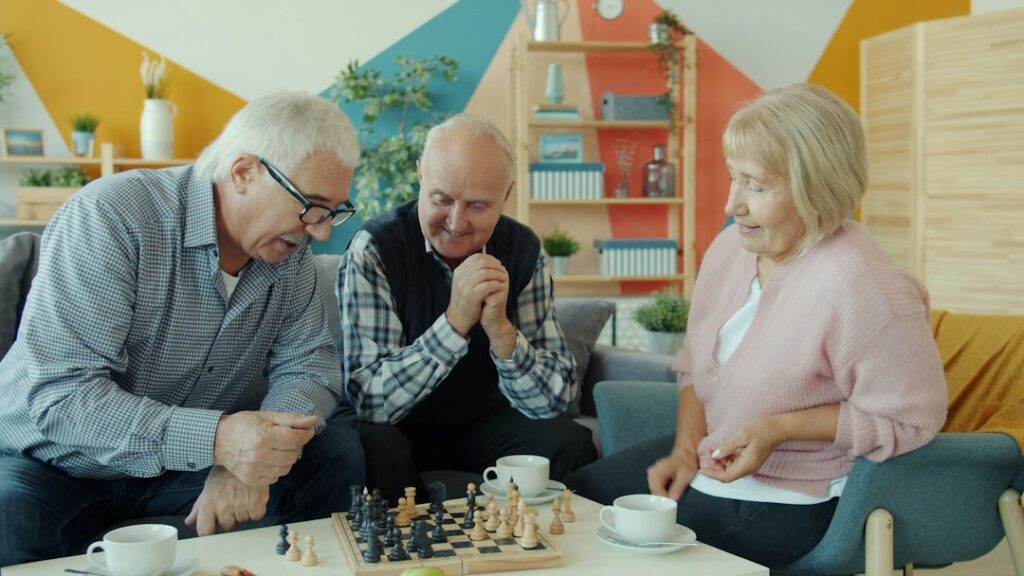
Assisted living communities in Swissvale, PA typically offer more than scheduled entertainment. Recreation programs can support movement, social connection, confidence, creativity, memory, and a sense of daily purpose. The most useful programs are designed around residents’ abilities, interests, cultural backgrounds, and comfort levels rather than treating every resident the same.
What types of activities are offered in assisted living?
Most communities provide a mix of social, physical, creative, educational, spiritual, and recreational activities. Residents may choose from group programs, one-to-one visits, informal gatherings, or quiet independent options.
Common examples include:
- Exercise classes, stretching, balance practice, and guided walking
- Card games, puzzles, trivia, bingo, and board games
- Music programs, sing-alongs, dancing, and listening sessions
- Arts and crafts, painting, seasonal decorating, and gardening
- Reading groups, current-events discussions, and educational talks
- Cooking demonstrations, baking activities, and shared meals
- Religious or spiritual gatherings based on resident preference
- Movie afternoons, live performances, and holiday celebrations
- Outings, outdoor time, and supervised community events
- Technology help, letter writing, and video calls with family
A strong activity calendar usually includes choices throughout the day, with programs at different energy levels. A resident should not have to attend a large group to participate. Quiet options, individual activities, and flexible attendance are equally important.
How do activities benefit older adults?
Regular recreation can help reduce isolation and preserve routines. Even simple activities give residents reasons to leave their rooms, interact with others, practice skills, and anticipate something enjoyable.
Physical programs may support flexibility, balance, coordination, and confidence with movement. They should be adapted for people who use walkers, wheelchairs, or seated exercise positions. Participation is not meant to be a competition.
Social activities can help residents form friendships and maintain conversation skills. Shared experiences such as music, games, or a discussion about local history may be especially helpful for people who are adjusting to a new living environment.
Creative activities provide another form of expression. Painting, arranging flowers, singing, or working with familiar fabrics can be meaningful even when a resident does not describe the activity as a hobby. The value may come from the process, sensory experience, or memories it brings forward.
Are activities appropriate for residents with memory loss?
Yes. Recreation can be adapted for residents with Alzheimer’s disease or other forms of dementia, but the approach may need to be different. Activities should be familiar, structured, and focused on enjoyment rather than performance.
Helpful adaptations may include:
- Shorter programs with simple instructions
- Familiar music from a resident’s younger years
- Folding towels, sorting objects, or arranging materials
- Reminiscence discussions using photographs or household items
- Repetitive crafts that do not require precise results
- Small groups with fewer distractions
- Extra time for responses and participation
A resident with memory loss may not remember attending an activity, yet still benefit from the positive mood, movement, or social contact. Staff should avoid correcting mistakes publicly or pressuring someone to finish a task. A successful activity is one that feels comfortable and meaningful in the moment.
How can residents choose activities that fit their abilities?
Residents do not need to be athletic, outgoing, or highly creative to participate. The right activity is one that matches current energy, mobility, attention, communication, and personal interest.
Someone who tires easily may prefer a short music session, a hallway visit, or a seated craft. A resident with good mobility may enjoy gardening, walking, or helping prepare a group program. People who dislike crowds may prefer one-to-one conversation, reading, puzzles, or time outdoors.
It is also reasonable for interests to change. A person who enjoyed large gatherings during the first weeks of residence may later prefer smaller groups. Another resident may need several invitations before feeling comfortable joining. Participation should remain voluntary, and declining an activity should not be treated as a behavioral problem.
What should families look for in an activity calendar?
A calendar can reveal whether recreation is genuinely varied or mainly limited to a few repetitive events. Families may want to look for programs spread across mornings, afternoons, and evenings, along with options for weekends.
Useful questions include:
- Are activities offered at different physical and cognitive levels?
- Is there a balance of group and individual programs?
- Can residents suggest or help lead activities?
- Are programs adapted for hearing, vision, mobility, or memory needs?
- Are outdoor activities available when weather permits?
- What happens when an activity is canceled?
- Are transportation arrangements and accessibility considered for outings?
- Can family members participate in selected events?
- Are cultural, religious, and personal preferences respected?

The schedule should also identify where activities take place and whether residents need to register. Clear information helps residents decide without feeling rushed or confused.
How does local weather affect recreation?
Seasonal conditions in Swissvale can make indoor programming especially useful during cold, wet, or icy periods. Communities should have alternatives when sidewalks, outdoor paths, or transportation routes are not comfortable or safe.
Indoor recreation does not have to mean sitting in one room all day. Hallway walking, indoor gardening, movement classes, music, crafts, and small social groups can keep the day active. During milder weather, shaded outdoor seating, supervised walks, and seasonal planting may provide fresh air without requiring strenuous exercise.
Residents and families should also consider whether outdoor areas have level walking surfaces, seating, handrails, adequate lighting, and protection from excessive heat or cold.
Can residents continue their old hobbies?
Often, yes. Moving into assisted living does not mean giving up familiar interests. A resident may continue knitting, woodworking on a modified basis, painting, reading, collecting, writing, bird-watching, or listening to a favorite type of music.
Some hobbies may need adjustments for safety or space. Sharp tools, open flames, ladders, heavy equipment, and certain chemicals may require supervision or replacement with safer materials. The goal is usually to preserve the purpose of the hobby while reducing avoidable hazards.
Families can help by bringing labeled supplies in manageable quantities and sharing information about how the resident used to enjoy the activity. Familiar materials may make it easier for staff to create a suitable program.
What if a resident does not participate?
Limited participation does not always mean that activities are uninteresting. A resident may be tired, anxious, hard of hearing, unfamiliar with the group, experiencing pain, or unsure how to enter a conversation. Some people need a personal invitation rather than a general announcement.
Staff may need to try different times, smaller groups, familiar subjects, or one-to-one introductions. Families can share information about past interests, preferred music, former routines, and activities the resident disliked.
A resident who chooses not to attend group programs can still have a meaningful daily routine through conversation, sensory activities, visits, reading, quiet music, outdoor observation, or helping with simple household tasks.
How can recreation support a sense of purpose?
Purpose often comes from contribution, not just entertainment. Residents may enjoy watering plants, welcoming newcomers, arranging table decorations, sharing recipes, teaching a card game, folding napkins, or telling stories about earlier experiences.
Activities are most meaningful when they allow residents to make choices and use abilities that remain strong. A program should not be judged only by attendance. A quiet conversation, a familiar song, or a short walk may be more valuable to one person than a crowded event.
For residents and families evaluating assisted living, recreation should be viewed as part of daily well-being. A thoughtful activity program gives people choices, respects changing abilities, and creates regular opportunities for connection without requiring everyone to participate in the same way.
